
Ticketing Industry
Is Robert Smith 'The Cure' For Ticketing Woes?
Another major tour onsale, another ticketing controversy.
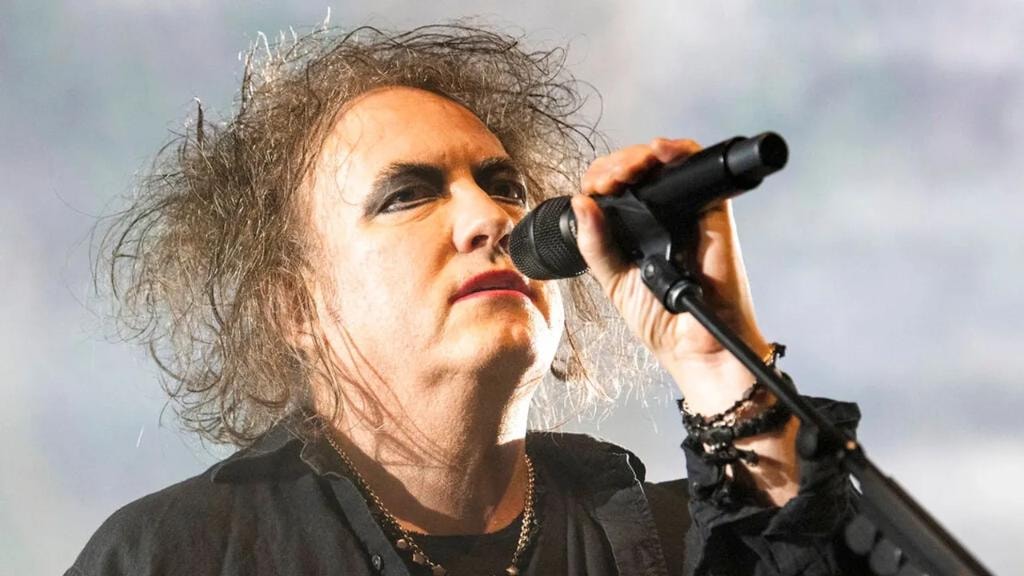
Another major tour onsale, another ticketing controversy. I wrote a piece on the Taylor Swift ticketing situation back in November, now the artist at the forefront of the ticketing wars is The Cure. I will attempt to peel back the layers and hopefully make this make sense for most people.
The backstory:
Robert Smith, the lead singer and songwriter of The Cure, has been an outspoken critic of Ticketmaster and the secondary market for many years. He has made several specific comments in the past about these issues, including:
Fees: In a 2016 interview with Billboard, Smith criticized Ticketmaster's practice of charging high fees on top of the face value of tickets, saying that "it's not a fair system for people." He argued that these fees make it difficult for many fans to attend shows and that the industry needs to find a way to make ticket prices more reasonable.
Resale: Smith has been a vocal opponent of ticket scalping, which is the practice of reselling tickets at significantly higher prices than the face value. In a 2019 interview with Rolling Stone, he called scalping "outrageous" and argued that it takes advantage of fans who are willing to pay more to see their favorite artists.
Transparency: Smith has also called for greater transparency in the ticketing industry, arguing that fans should have a clearer understanding of how tickets are priced and sold. In a 2019 interview with NME, he said that "the whole process [of ticketing] should be much more open and honest."
Fast forward to 10 days ago, the Cure announced a 30-show tour across North America, it’s first on this continent in seven years. Leading into the tour onsale, Smith was very active on Twitter, keeping fans informed of the policies that were going to be in place to keep tickets “affordable for all fans”.
First was the pricing itself. Tickets were priced as low as $20.00ea. in some markets. Ticket prices were going to remain fixed, as well; no dynamic pricing was going to be utilized. For a major headlining act, The Cure was undoubtedly leaving money on the table, but artists are free to set pricing and policies as they wish.
The other thing the band implemented, which caused some controversy, was that transferability was going to be restricted. This means that digital tickets can’t be sent from the original buyer to anyone else. This effectively eliminates the secondary market and the high prices that would inevitably be charged for a tour of this magnitude. It’s important to note that this practice is illegal in three US states, including New York, where The Cure is playing three shows at Madison Square Garden in June. A quick check of StubHub shows hundreds, if not thousands of tickets available for these three dates with a get-in price around $100, five times higher than the face value.
The Cure also utilized Ticketmaster’s Verified Fan program, which requires pre-registration in exchange for the opportunity to purchase tickets in advance of the general public. The system is far from perfect, but according to David Marcus, Head of Music at Ticketmaster, "Verified Fan” is an incredibly effective program in ensuring that tickets get into the hands of fans, not bots. It has proven to be particularly effective in preventing scalping and fraudulent purchases, reducing the number of tickets sold on the secondary market, and ultimately increasing access to live events for fans.
On Wednesday March 15, the Verified Fan presale went live, and tickets began selling. Almost immediately, a screen shot of the ticket fee breakdown began to go viral across social media. Clearly the fees are higher than the value of the tickets, which drew the ire of many people. Why is this the case in this example? Well, first let me breakdown the different fees.
The service fee is either a set amount or a percentage, or a combination of the two, that is typically split amongst the ticketing provider, the venue and possibly even the promoter and/or artist. Credit card charges are typically added in here as well.
The facility charge is typically a set amount per ticket and 100% of that revenue goes to the venue.
The order processing fee is a set amount and 100% of that revenue goes to the ticketing company. The amount is also the same whether one ticket is purchased, or 100 tickets are purchased.
These fee breakdowns are negotiated between the ticketing company and the venue or promoter and codified in what is known as an exclusive licensing agreement. There is no set standard fee structure out there, every deal is different. This agreement also locks in the venue or promoters into using that ticketing platform for all their events.
Some other important contexts for this tour:
Live Nation touring is the promoter of the tour.
Ticketmaster is not the only ticketing platform being utilized. Houston and Denver utilize AXS and Philadelphia is a Paciolan building.
Of the 26 different venues hosting shows as part of the tour, six are Live Nation venues (Dallas, Albuquerque, San Diego, Silicon Valley, Cleveland, and Boston). I’m sure most of you are fully aware that Ticketmaster is a subsidiary of Live Nation.
The fee structure for The Cure appears to be from a Ticketmaster order at one of the six Live Nation amphitheaters that are hosting a show. The $10.00 “facility charge” is for parking. None of those six amps charge for general parking because that cost is buried in the facility charge. (There are options for upgrade parking for an additional cost.) As mentioned, the facility charge is typically a set amount so the $10.00 is being added on if the ticket costs $20.00 or $120.00. A $10.00 facility charge on a $20.00 ticket is a bad optic. The service fee is what it is and, while $11.65 on a $20.00 is certainly a large percentage of the ticket face value, I don’t think there would have been the outrage had there just been a service fee without the facility charge.
At the end of the day, this fee breakdown seems to be an extreme example, and not the norm across the board. (Currently, I haven’t been able to find any shows with ticket inventory on the primary marketing ticket platform, so I can’t do a test and see the different fees from different venues. Rest assured through, regardless of venue or ticketing platform, there is a service fee attached to the ticket.)
To his credit, Robert Smith was very active on Twitter the day of the presale and clearly got the message that people were unhappy with the fee structure. Smith, or his management, and Live Nation quickly devised a plan where partial refunds will be issued as a “gesture of goodwill” for the lowest ticket price transactions.
Now, the story is being presented that Ticketmaster has agreed to this, which is a dubious claim in my opinion. As stated above, all the fees aren’t all going to Ticketmaster nor is Ticketmaster the only ticketing platform involved on this tour, so I have a hard time believing that Ticketmaster is driving the bus on this. What I imagine is happening is that either The Cure is foregoing some of their artist guarantee and/or Live Nation touring (the promoter) is foregoing some of their fee to defray the cost of partial refunds to ticket buyers. I have a hard time believing Ticketmaster (or the other two ticketing platforms) is going to eat this cost, nor are the individual venues going to forgo their rebates from the ticketing platforms.
Semantics aside, Smith’s actions will surely ingratiate him with fans of The Cure. In the end, the controversy surrounding The Cure's tour and ticketing platforms’ role in it serves as a stark reminder of the ongoing struggle between artists, fans, and the industry that exists to connect them. There are no easy solutions, but I feel like the live event industry is better off with artists like Robert Smith who take initiative to learn the business side and use that knowledge to leverage better relationships with the ticket buying public.